Sunday, May 11, 2014

Review of “Sword Art Online”


      Sword Art Online is an Anime series that was based on a Light Novel series written by Reki Kawahara. The series was dubbed in English and brought to North America via Aniplex. The premise of the show is that 10,000 players join the Virtual Reality Massive Multiplayer Online (VRMMO) RPG entitled “Sword Art Online”. Once in the world the users suddenly find out that they are unable to log out. They then find out via the game developer Akihiko Kayaba that this was his intention and the only way out would be to beat the game. He also informed them of another mechanic: should they die in this world, they will die in the real world. 


      In the series they travel to two different game worlds, the first being Sword Art Online, the second being Alfheim Online. It also looks like in the second season they will be exploring two more games, which will be cool. 

      The series has a lot of nods to MMO players in the things said and done in the world. Also the story is actually paced fairly fast, which is a surprise from most Anime series. You rarely feel like anything being done is just “filler” as plot points usually are in every episode. The only unfortunate thing about the quicker pace is that they do miss opportunities to explore certain aspects of each world. I feel like from the first season we missed more of Alfheim Online than Sword Art Online. 

      The main character in the show is Kirito who is late-middle school/early high school aged student who loves VRMMO games. In the game he falls in love with another student Asuna and the majority of the plot is focused on the two of them once they meet. The show addresses some pretty serious concepts like what reality really is. They also talk about how to make the most of each day regardless of the circumstances. 

      The show did a great job of handling the dramatic points of the story. They didn’t dwell to much on them, but they did show the major impact that they had on the players. The brief flashbacks that occurred in the second half of the series help to illustrate the continuous impact that these events had. The first season was wrapped up quite nicely as far as the plot went and it could certainly lead to additional stories, but it could also just be the stand alone end of the series as well. 

      I’m really looking forward to the second season of this series. I watched the dubbed version of the series for this review, I’m not sure I will be able to wait for season 2 to be dubbed. Season 2 will be premiering in Japan this summer, and I’m sure it will be just as good as the first series. 


Wednesday, May 7, 2014

Album Review - Eric Hutchinson's “Pure Fiction”


      Eric Hutchinson is a singer-songwriter who has been making music well over a decade and has recently released his fifth album entitled “Pure Fiction”. This album I found to be polarizing in that on several tracks he found some great balance but in others his weaknesses (Namely lyrics, and repetitive pop like themes) show through even more. 


      Hutchinson’s greatest strength is his voice, and no matter what track you listen to on this album (or likely any of his other work) this will be very clear. The songwriting draws the focus to his voice, and he is an excellent pop singer with a lot of flexibility and style. After a listen to this album I have been convinced that I want to see him live, as I have a very strong feeling that he is excellent live (as his acoustic tracks show). 

      Highlights of this album include “Goodnight Goodbye”, a simplistic track that emphasizes his excellent voice as well his perfect lyrical setting for the sentiment he was going for. This was the track that drew attention to this album for me. Also the track “Forget about Joni” in contrast shows some really clever lyric writing. This song also has a latin feel which was performed quite well with some simple instrumental choices and styling for guitar. This track is also acoustic adding more credence to the belief of his ability as a live performer.


     The weaker tracks on this album tend to emphasize the same issues. Tracks like “I Got The Feeling Now” and “A Little More” use really simple lyrics and pop hooks that make these tracks sound so poppy to the point of them being too sweet and simple. A title of a track should only be said so many times in the track itself, and should never be the entire lyrical content of the chorus (Unless it’s a Fall Out Boy-esque title which could be a short novella). 


      Overall I find this album to be difficult to assess wholistically. I love the artist’s voice and musicality, however I find that at times his songwriting choices pull me away from truly appreciating that work. I found that with most tracks on this album I either really liked them, or really didn’t. With many tracks being split along these two specific issues (Performance vs. Song-Writing). When listening in the moment I think this album is a great listen, however go much further in depth and you begin to uncover some of these issues which could be improved.

      If your a fan a pop music, like singer-songwriters, or just a fan of great singers this album is a good listen. If you are looking for a deep musical experience with deep lyrical meaning this album is not going to be for you.


Sunday, May 4, 2014

Bravely Default (3DS) - Initial Impressions


      I was looking for a new JRPG to get into this past week and I remembered that not too long ago Bravely Default was released for the 3DS. This game made by Square Enix draws many of its' influences from the older Final Fantasy games and in many ways this is a good thing!

      Bravely Default is the story of four characters who happen to meet together in an effort to help Agnès (ahn-yes) go around the world and purify the four crystals from the all-consuming darkness. The characters all have their own unique stories, and it seems that surprises will be coming throughout the plot and game. 

      The job system is also back in a big way in this game through the use of asterisks. The cool thing about the game is you have to beat the class before you can actually use it. This also forces you to acknowledge the weakness of the class. The number of classes is quite extensive and has some unique classes beyond the standard set most Square Enix fans would be accustomed to (Black Mage, White Mage, Knight, Thief, etc.).


      The game also ramps difficulty quite well so far, which is nice because already I have felt times where I needed to take some time and grind some experience. I feel this really harkens back to a genuine JRPG experience. I am also trying my best to avoid guides as well as trying to min/max my characters to break the game. We’ll see how that works out as I progress further along in the game. 

      Bravely Default also pulls from other games outside of the Square Enix stable for inspiration. I noticed that they use “Party Chat” which are little vignettes among your party members. This reminds me of something similar from the Tales series which is another JRPG staple. 

      The battle system is very similar to most standard JRPGs except for one major change. The Brave/Default system from which the game drives it name from. During battle you can use brave and stack many attacks at one time, or use default in order to save up your turns. This can severely change the strategy and flow of a battle as both allies and enemies use this system. I have found times where this system can be devastating to my party and at times made battle very easy (especially against random encounters). This makes grinding relatively easy and not too much of a chore. 


      I am only roughly through 10 hours of the game, and only on chapter two. I know that many more surprises are coming in the game and I’m really looking forward to seeing what end game is like. I will have a full review once I have finished the game. 

Sunday, April 13, 2014

Guild Wars 2 - How MMOs can work without a subscription


     I mentioned in my last article Annoying Game Mechanics how Guild Wars 2 was able to break the standard MMO subscription model with the monetization model it follows. I was asked to look at this a little bit deeper, so I wanted to elaborate a bit on how they are able to make that possible. 

      For those who do not know, Guild Wars 2 is a sequel to the genre-shattering original Guild Wars which also followed a non-subscription model. However at least for myself I found the original Guild Wars to be quite limiting and wasn’t nearly as compelling as the competing MMOs in the market at the time. Guild Wars 2 has learned a lot in its time, and is now a fully functional and compelling MMORPG with its own story and unique gameplay. 

      Much like other games of the genre, you still need to fork over the usual $60 (at launch, now much less) to get into the game. However thats where the similarities end, because that is all the financial investment you have to put into this game. You can pay more, and that is through their use of microtransactions. 


      Microtransactions are where you can purchase things in game to help you level up faster, get items quicker and the like. For those who have played free-to-play games this should seem very familiar. What makes Guild Wars 2 different is the absence of a pay-wall. A pay-wall which we discussed in another article is where a game requires you to pay more money in order to continue to advance. Essentially these microtransacations in Guild Wars 2 just allow you to level up and advance faster, and alleviate the need to grind. For most MMO players grinding is a non-issue, and it is always a challenge to get all the cool stuff WITHOUT having to pay. 

      What is great about Guild Wars 2 is that they also are continuing to add unique content. They add content every 2 weeks. This is quite the undertaking as most MMOs are not able to generate that much content on such a tight schedule. In the end it just goes to show that the people at NCSOFT and ArenaNet are dedicated to creating a quality product and keeping at a reasonable price. This explains the strong following this game series has generated and maintained. 

Sunday, April 6, 2014

“MAKE IT STOP!” - Annoying Game Mechanics (Part 2/2)

      Alright, here is part 2 of Annoying Game Mechanics. Lets start up where we left off:

image

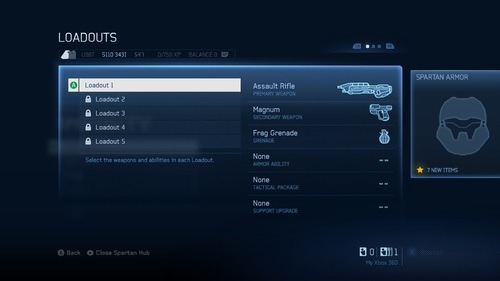
      Multiplayer Progression System - Most multiplayer First Person Shooters now use a progression system in which you have to continue to produce kills and meet objectives in order to level up. Leveling up usually unlocks weapons and additional perks. This encourages players to continue to play in order to achieve all the unlocks and to get the full game experience. 

      This system seems to work well enough for most players, however it does come with problems. The biggest problem is how this system integrates with matchmaking. Within the first 3 months the system works ok because of the fact that if you are a high rank at this point, you are probably pretty good. Later in the game’s shelf life this becomes an issue, as gamers take time away and become rusty, and also gamers who are not good may have just invested a lot of time to make a high rank. If your not a great player (me) and your forced to play good players just because of your invested time in a game, this can be a brick wall and ruin the fun. 

      Bad AI - Every played a game where the computer controlled opponents or allies have done some really dumb things? I’m sure we all have. This game mechanic is rarely a deal breaker, but certainly can be annoying and make certain tasks/quests quite frustrating. I will break this section down by allies and enemies. 

image

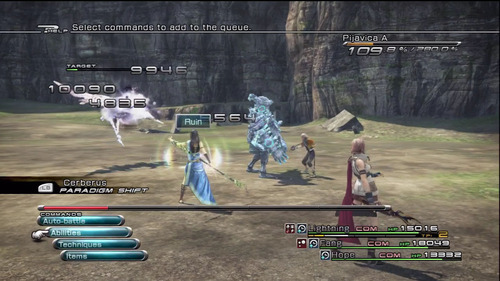
      Bad Ally AI - One thing immediately comes to mind when I think of bad Ally AI - escort missions. Having to escort a person who is basically a walking liability can be incredibly frustrating, especially if they lack common sense. Also RPG games suffer from this as well as Ally AI may not be smart enough to know to do certain things (for example heal) or to do certain type attacks that an enemy may be vulnerable to. Finally the last Ally AI example is when you have someone who is supposed to help you, but they are really just a liability and are really doing nothing. 

image

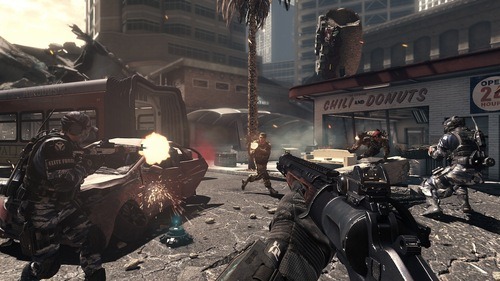
      Bad Enemy AI - I have seen the worst enemy AI in most FPS single player campaigns. It’s annoying when you get to certain areas where the enemies spawn in endless droves until you move on, this tends to be unrealistic at best. Also we see far to often situations in games that have stealth elements that the enemy AI is either too good, or too dumb. This quickly removes the feel of a quality stealth experience. In RPG games, we see enemy AI not necessarily using the best attacks in order to try and win, it is instead more of a random selection of attacks. 

image

      Quick Time Events (QTE) - The folks who helped contribute to these blog posts mentioned this as another annoying game mechanic. Their were a few things they mentioned in particular. The first being unrealistic activities that are QTE only. This happens in adventure games and RPGs alike, we see the hero (or heroine) doing some ridiculous stunt or ability that we will never be able to actually replicate in the real game. While I see the frustration in this, I would counter with better to see it in a QTE than not at all. The second part of the frustration with the QTEs is the inability to skip them. Many players want to get to the end, and are not as interested in the QTEs in between active gameplay. I personally disagree and think that QTEs really bring us into the game world, add to character development, and really tell a story. 

image

      Filler Quests - Collect 12 wolf pelts for me, slay 7 goblins, and find 5.678 pieces of pie around the town - Sound Familiar? To anyone who has ever played an RPG or MMORPG this should. Filler quests are side quests and activities that have absolutely no bearing on the plot or really do any work in world building. Ultimately I find this to be lazy as so many of these quests could have meaning if they were tweaked and provided a little context. 

      Thanks again to everyone who contributed ideas to this blog post. Next week I will take a look at Guild Wars 2 and how it is breaking the traditional MMORPG monetizing rules.